
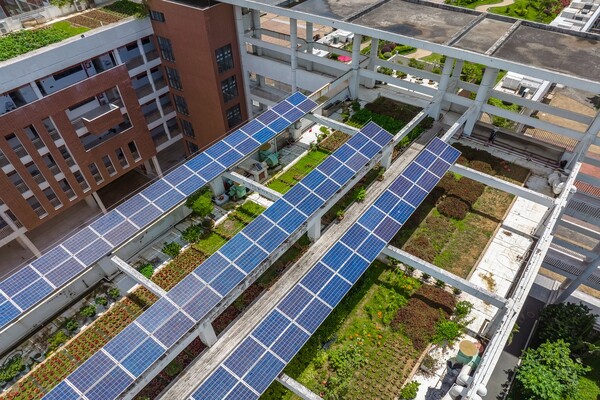
Solar solutions for schools offer numerous advantages, encompassing both economic and environmental benefits. Let’s take a closer look at these advantages:
-
Cost Savings:
- Reduced Electricity Bills: By harnessing solar energy, schools can significantly reduce their dependence on traditional grid electricity, leading to substantial cost savings over time.
- Long-Term Investment: While the initial installation cost may be an investment, solar panels have a long lifespan, and the return on investment becomes more significant over the system’s life.
-
Environmental Sustainability:
- Reduced Carbon Footprint: Solar energy is clean and renewable, producing electricity without emitting greenhouse gases. Schools adopting solar solutions contribute to environmental sustainability by reducing their carbon footprint.
- Educational Opportunity: Installing solar panels provides an opportunity for schools to educate students about renewable energy, sustainability, and environmental stewardship.
-
Educational Benefits:
- Hands-On Learning: Solar installations on school premises can become educational tools. Students can learn about solar technology, energy conservation, and environmental science through hands-on experiences with the solar system.
- STEM Education: Solar projects offer practical applications for science, technology, engineering, and mathematics (STEM) concepts, fostering interest and knowledge in these critical fields.
-
Energy Independence:
- Reliability: Solar power systems can provide a reliable source of energy, especially in areas with intermittent grid access or in the case of grid failures. This energy independence ensures a continuous power supply for essential functions.
-
Community Engagement:
- Positive Image: Schools that adopt solar solutions demonstrate a commitment to sustainability, contributing to a positive image within the community. This can lead to increased community support and involvement.
- Community Education: Solar installations can be used to educate the broader community about the benefits of renewable energy, potentially inspiring similar initiatives in other institutions or homes.
-
Grants and Incentives:
- Financial Support: Various government incentives, grants, and rebates are often available to support solar installations in educational institutions, making the initial investment more manageable.
-
Reduced Reliance on Fossil Fuels:
- Mitigation of Climate Change: By reducing dependence on fossil fuels, schools contribute to global efforts to mitigate climate change and transition to a more sustainable energy future.
-
Operational Resilience:
- Backup Power: Solar power systems with energy storage capabilities can provide backup power during grid outages, ensuring that critical school operations can continue even during emergencies.
-
Long-Term Planning:
- Hedging Against Rising Energy Costs: Solar solutions provide a degree of predictability in energy costs, protecting schools from potential future increases in traditional electricity prices.
Implementing solar solutions in schools is a multifaceted strategy that aligns with environmental responsibility, educational objectives, and economic considerations. As technology advances and the cost of solar installations continues to decrease, more schools are likely to explore and adopt solar solutions for a sustainable and resilient future.
Hi, this is a comment.
To get started with moderating, editing, and deleting comments, please visit the Comments screen in the dashboard.
Commenter avatars come from Gravatar.